

Avatar: Fire and Ash Movie Review: Cameron’s Visual Brilliance Struggles Against a Hollow Narrative Core
James Cameron’s Avatar: Fire and Ash delivers stunning 3D visuals and extraordinary world-building, but its convoluted narrative and emotional detachment make it a visually impressive yet hollow sci-fi epic.
A still from Avatar: Fire and Ash, showcasing James Cameron’s signature 3D world-building and the Na’vi’s newest tribe, the Ash People.
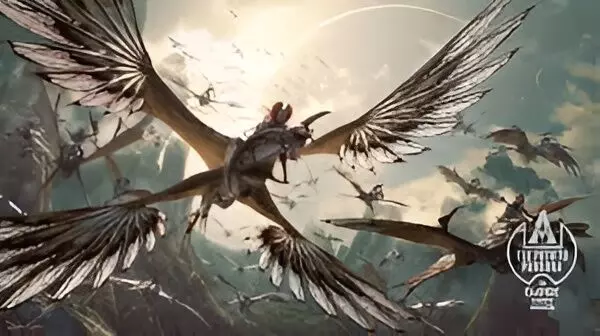
Avatar: Fire and Ash ushers in a third chapter in the sci-fi epic from James Cameron. The role is a technological breakthrough; an explosion of eye-popping 3D wizardry creating mesmerizing glimpses of his created world. But beneath this polished, dazzling layer lies a story that at times feels stretched thin, distant, and overwhelmed in its own scope.
Visual potency with corroding awe
Fire and Ash is a slick study of Pandora with all kinds of neat details from lush environments to tribal-like structured cultures to bright, magnificent animal designs' -albeit too often the extravaganza may feel encroaching rather than immersive due to Cameron’s characteristic scale of magnetism. The film may attempt to save itself with visuals, but it would be a great lie to say that duplicating a story is anything but—story that feels more and more as though it's been sandwiched together so as to extend the running time.
More Pandora Unraveling, Empty Soul in the Core
In a drama lasting almost three hours, Jake Sully (Sam Worthington) and Neytiri (Zoe Saldaña) become intertwined into a shared family with a different Na’vi tribe, the Mangkwan or “Ash People.” The film started with hope for genuine emotion—grief, betrayal, and familial discord—but just as quickly reprotracts into spirit-liberation clicheâs, vendetta-motif attacks, and near endless battle sequences.
Cameron once thought of the Avatar series as a profound metaphor for colonialism and ecological harmony. In the current episode, these themes seem to limp alongside a ten-step series of production trickery and moralizing so easy that it "jumps genres."
Performances Trapped Under Heavy CGI
The cast, including Sigourney Weaver, Stephen Lang, Oona Chapman, and Jack Champion, delivers committed performances. Yet their work is often constrained by digital layers and a script that leans towards exposition and archetypes rather than depth.
- Spider (Jack Champion) becomes a narrative tool rather than a fully developed character.
- Kiri (Sigourney Weaver) represents Pandora’s spiritual core but is held back by vague mysticism and convenient plot turns.
- Oona Chapman’s Varang, the Tsahik of the Ash People, is the standout—intense, commanding, and genuinely magnetic.
Her dynamic with Stephen Lang’s Quaritch brings energy and unpredictability to the film, offering glimpses of the conflict the story could have explored more boldly.
Action in Excess
Cameron’s action direction remains technically unmatched—precise, kinetic, and visually operatic. Yet Fire and Ash often feels like an unending sequence of chases, sieges, and ritualized combat. The sheer quantity of spectacle begins to blur, leaving little room for narrative escalation or emotional grounding.
An Epic That Feels Emotionally Empty
Despite its environmental messaging and anti-imperialist framing, the film often appears more fascinated with destruction than introspection. Its thematic ambitions—identity, hybridity, trauma, and spiritual connection—struggle to break through a structure dominated by visual grandeur.
By the time the film reaches its climactic battles, the exhaustion outweighs the amazement.
Verdict: Technically Dazzling, Emotionally Hollow
Avatar: Fire and Ash is a triumph of technology and visual artistry, reaffirming Cameron’s mastery of cinematic scale. However, its narrative shortcomings, heavy-handed symbolism, and lack of emotional resonance make it the weakest entry in the franchise so far.
Rating: ★★★☆☆ (3/5) for visual brilliance, reduced due to narrative stagnation.





